
The Brief
Build a brand that makes people want to participate.
Verve Voices needed a visual identity that could sit within Verve's broader brand while carving out its own personality: warm, conversational, and distinctly community-focused. The platform hosts polls, surveys, forums, social activity, and rewards, but none of that value came through in how it looked or felt.
The starting point was simple: what does it feel like to have your voice heard? From that, the visual direction grew around the idea of dialogue: speech, exchange, and conversation made visible.
"The brief was to create a brand identity that felt conversational enough to encourage genuine participation."
Logo Design
Four directions. One clear winner.
Sketch explorations began around speech bubbles and flowing scripts: forms that immediately communicate dialogue and community. Four distinct logo directions were developed and presented before landing on a bold speech-mark pairing Verve's black with red.
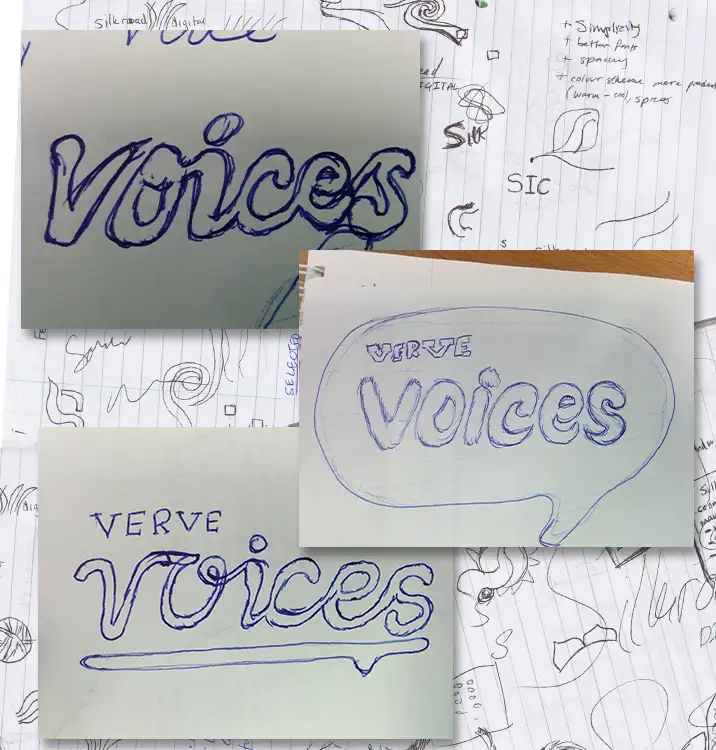
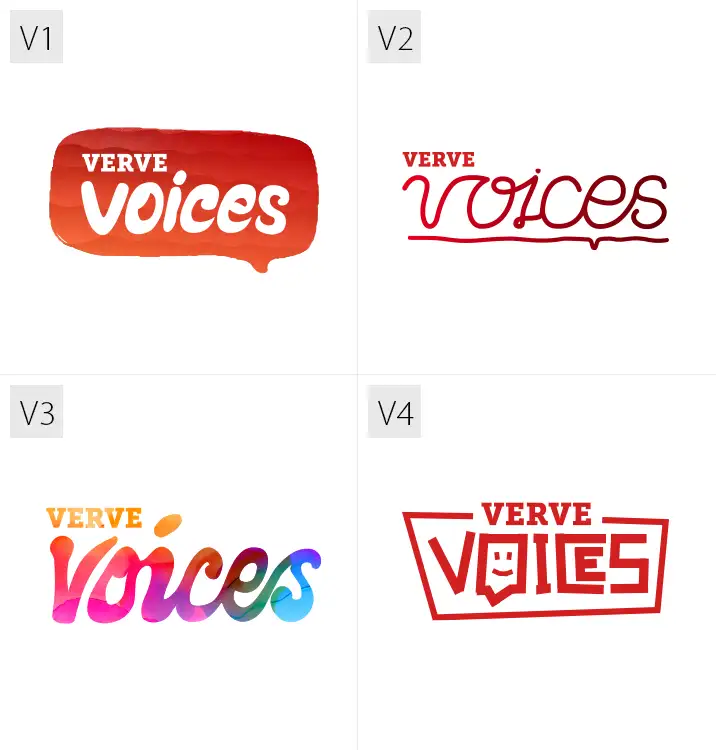
Early sketches (left) · Developed concepts (right)
The chosen direction uses the speech mark as both a literal and symbolic device: it's recognisable at a glance, scales cleanly across digital and print, and immediately signals the platform's purpose without explanation.
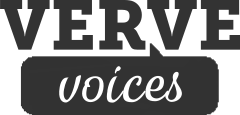 Primary: Black
 Reversed: White
 Colour: Brand
Three logo treatments across brand applications
The Challenge
More than a surface refresh.
The existing platform had a lot going on: login, surveys, social hub, rooms, forums, news, profile, messages, and rewards. But it felt dated and functional rather than lively. The central issue wasn't missing features. It was that none of the existing features felt worth engaging with.
The redesign needed to go beyond cosmetics. It had to reframe the entire experience around member participation, foregrounding activity and making features like polls, comments, rewards and profiles more prominent and attractive.
- 01 The previous homepage prioritised join/login messaging over community activity, putting the barrier before the value.
- 02 Features like rewards, polls and winner showcases were buried; the most motivating parts of the platform were invisible.
- 03 The static, utilitarian presentation created a corporate rather than communal atmosphere.
Approach
From content blocks to member hub.
Early concepts tested navigation organisation, hero sections, activity modules, profile areas, winner showcases, and reward systems. This process deliberately shifted focus away from simple content blocks and toward an integrated member hub, somewhere members would want to return to, not just log into.
Multiple iterations refined the balance between brand storytelling, member activity presentation, and incentive mechanics. The key insight was that the social and reward elements, when made visible, did the heavy lifting for participation motivation.
Key changes
An expanded hero banner led with community identity rather than a login gate. Streamlined navigation brought key features within one click. A social-style activity feed and dedicated reward and winner sections made member achievement visible and aspirational. Strategic use of cards, imagery and whitespace improved scannability throughout.
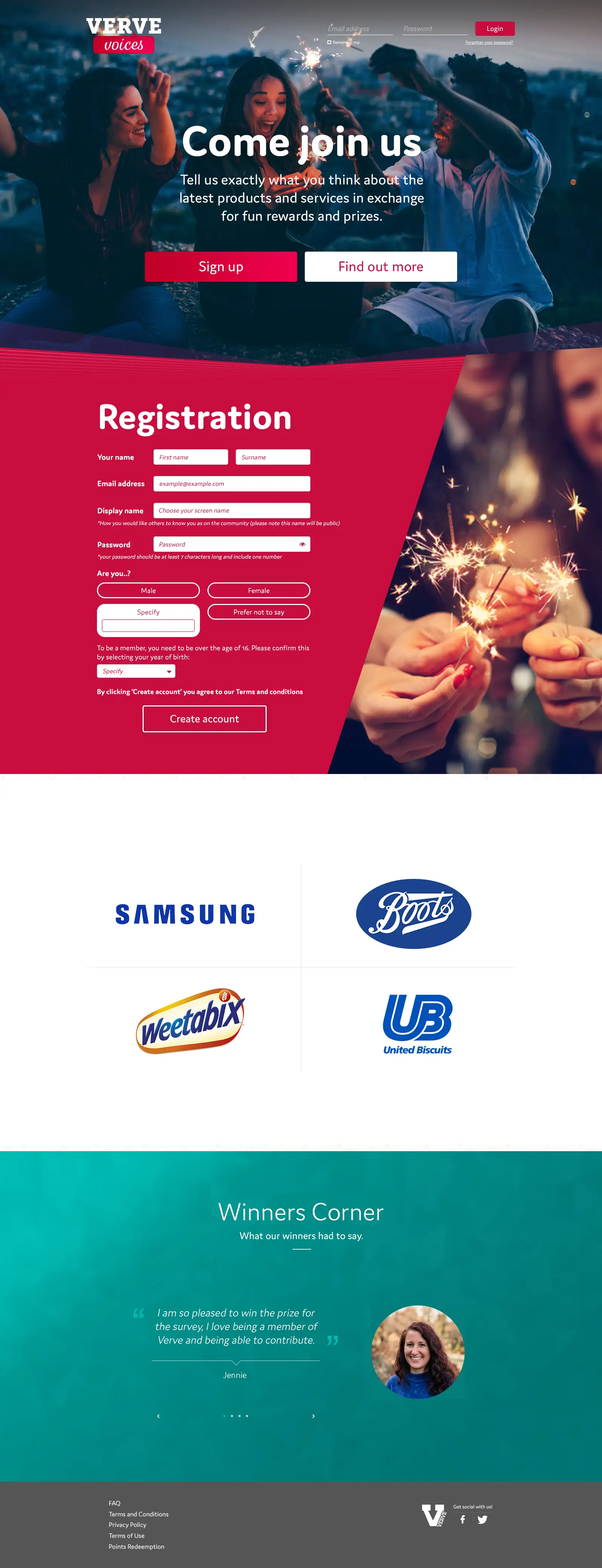
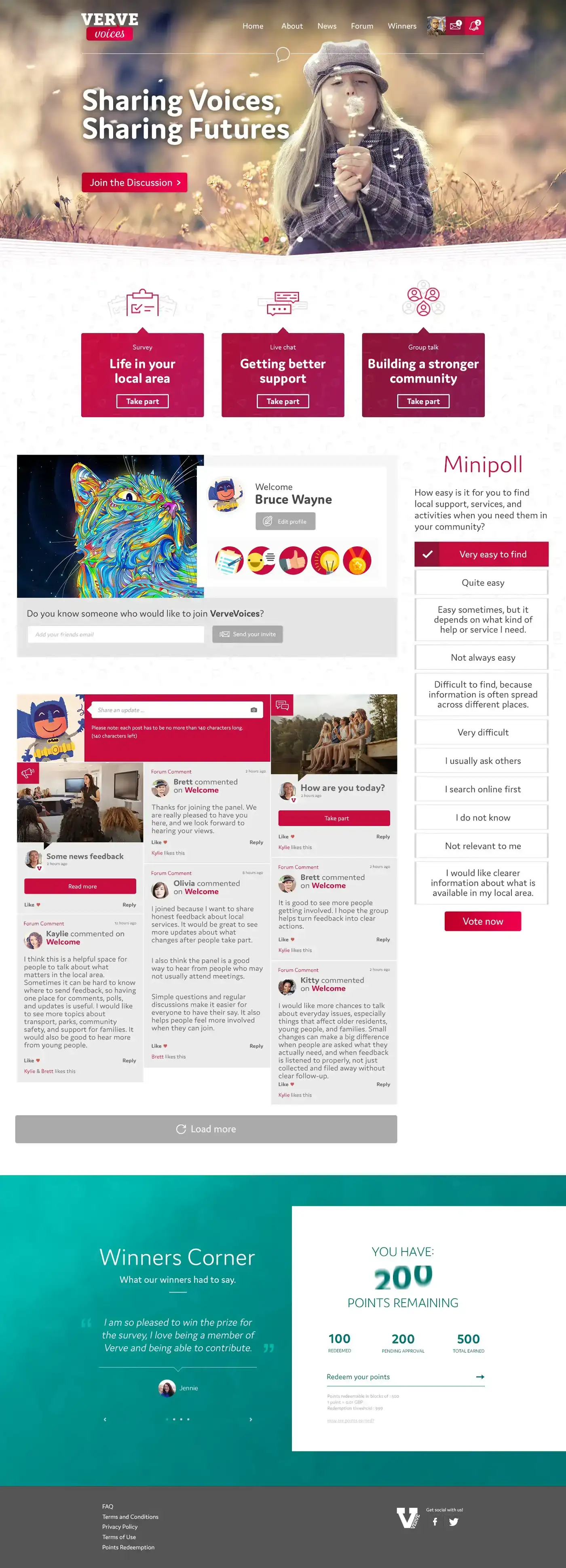
Login experience (left) · Refreshed homepage (right)
Outcome
Utility to community.
The end result was a refreshed Verve Voices homepage that felt much more modern and engaging than the original. The fundamental panel structure remained intact while the presentation reflected updated branding and elevated participation visibility.
The redesigned interface successfully transformed from utility-focused to community-driven, making key actions more discoverable and establishing stronger member identity and momentum. The brand identity, anchored by the speech-mark logo, gave the platform a distinct, ownable visual language that could carry consistently across all touchpoints.
"The end result felt much more modern and engaging; the same platform, but one that now communicates its value upfront."
Reflection
Brand and experience as one brief.
Verve Voices was an interesting project because the brand identity work and the UX work were inseparable. The logo needed to communicate dialogue and warmth; so did the homepage layout. Getting both to pull in the same direction, without one undermining the other, required going back and forth between mark-making and screen design throughout the process.
The biggest learning was around how much a community platform's perception depends on what you show first. Making rewards and member activity visible above the fold wasn't a design flourish; it was a strategic decision about what the platform is actually selling.
What's Next
Directions for continued development.
- Motion and microinteraction design: bringing the community feed and reward moments to life with purposeful animation.
- Mobile-first iteration: the platform sees significant mobile traffic, and the design system would benefit from a dedicated mobile pass.
- Member profile pages: giving participants a richer sense of identity and contribution history within the community.