The Brief
Clients needed a community, not just a form.
Each client came with a different need, but the same underlying goal: a place where recruited members could be engaged on an ongoing basis. Polls, surveys, discussions and rewards all needed to work together inside a single branded experience that felt like it belonged to the client, not the platform.
Members needed a reason to return. That meant making the platform feel valued and considered, not generic. Every panel had to carry the client's visual language convincingly, even when working within a templated CMS.
"A generic panel gets ignored. A panel that feels like your brand gets members coming back."
Scope of Work
More than design, full delivery.
Each project varied in complexity depending on the client and platform, but the typical scope covered the full journey from brief to live build.
Some panels required a full identity from scratch, including a logo and colour system built to sit alongside an established client brand. Others required adapting existing brand guidelines into a new platform environment. In all cases the build had to be responsive and production-ready.
Client Work
A selection of delivered panels.
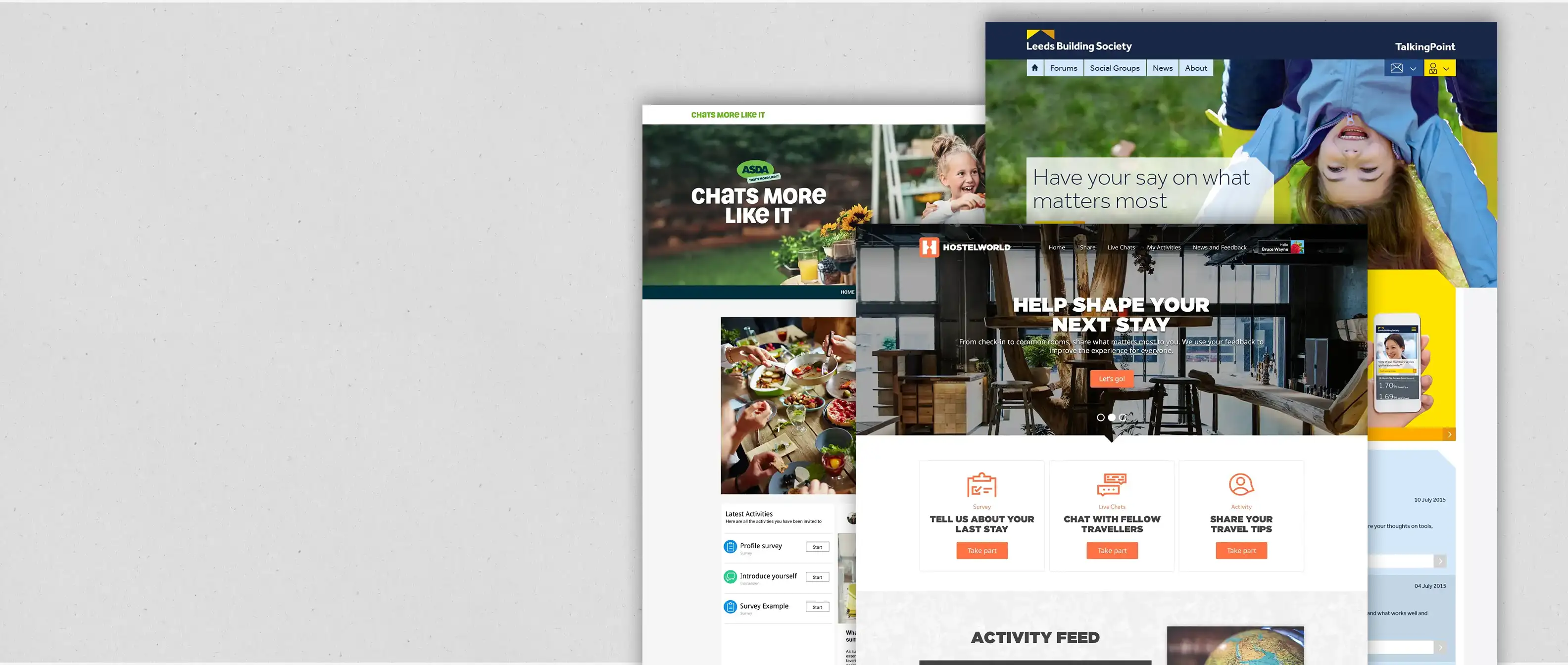
Each panel below was designed and built to the client's brand standards, adapted for the constraints of the platform while maintaining a considered, on-brand experience throughout.
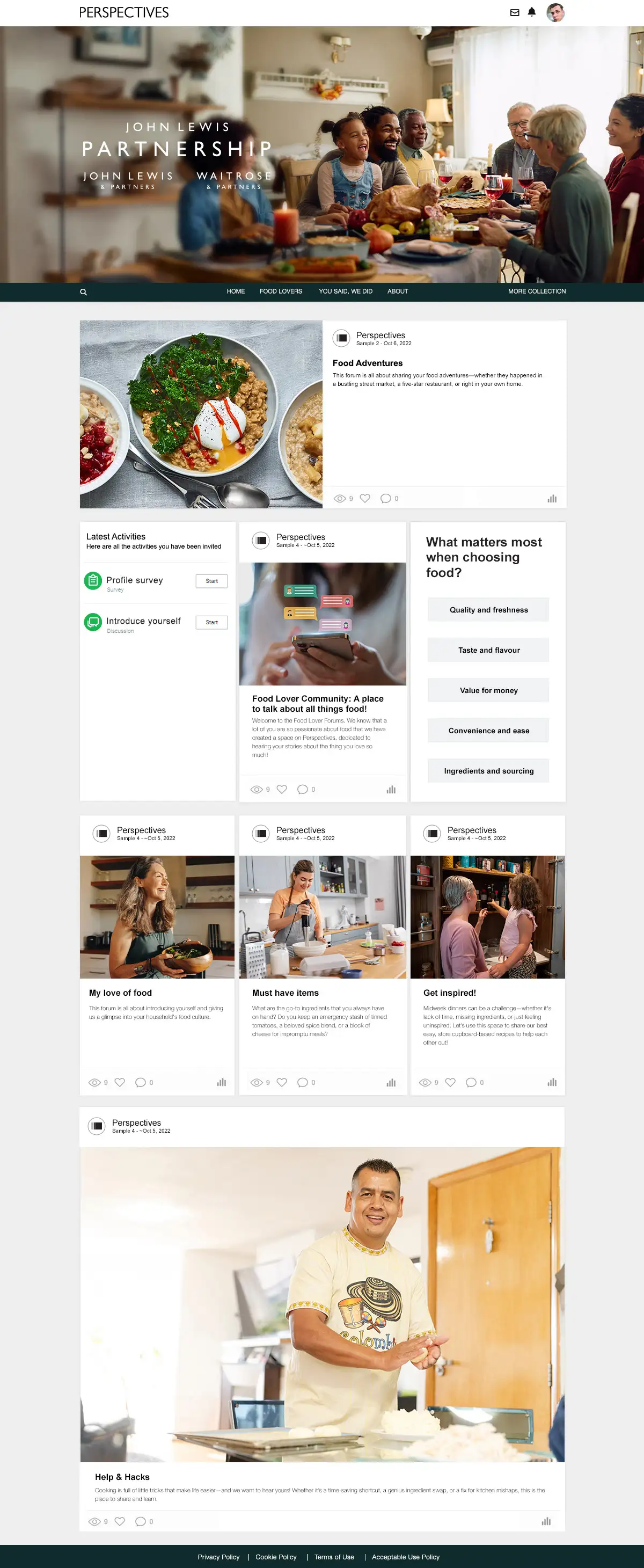 John Lewis Partnership
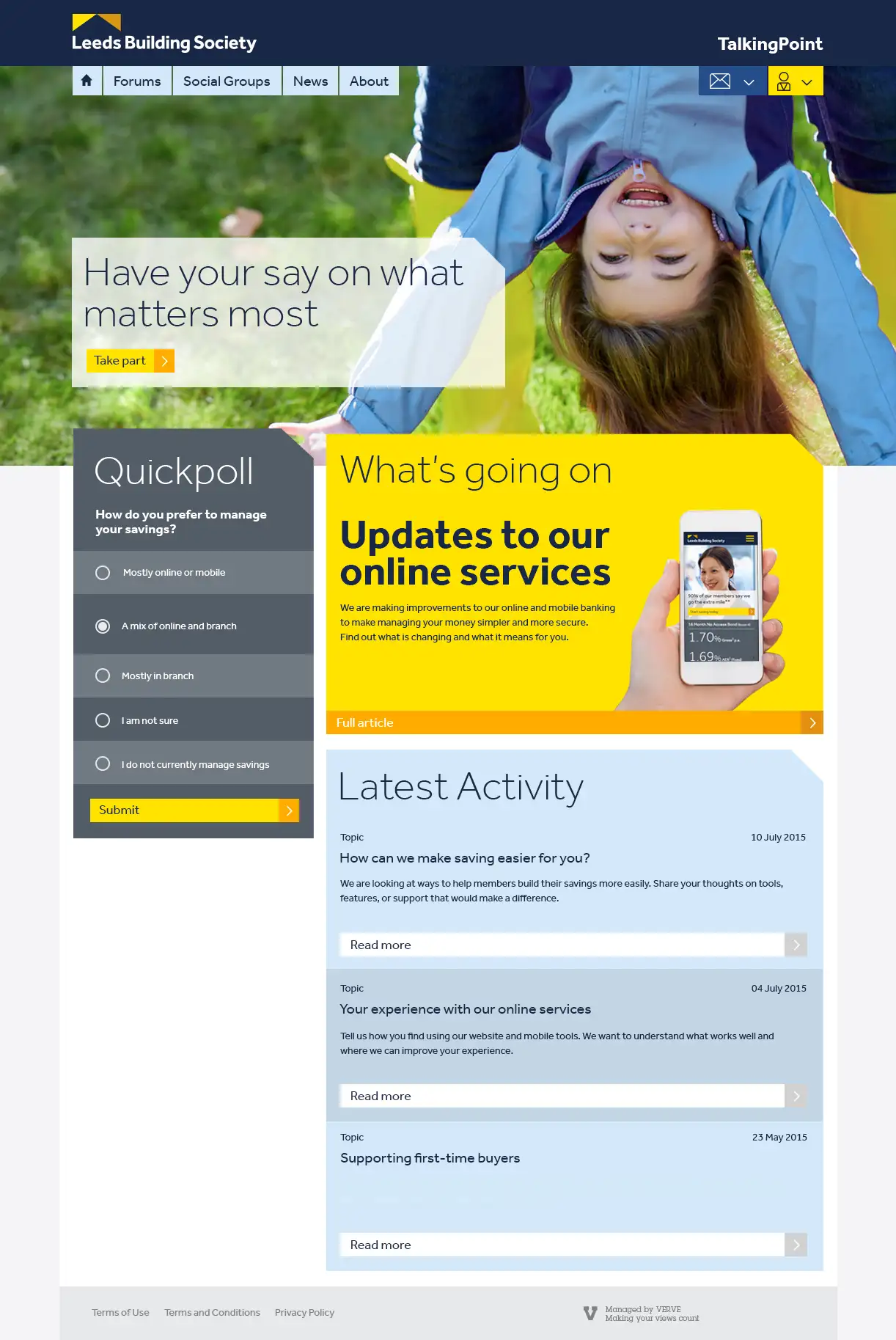 London Business School
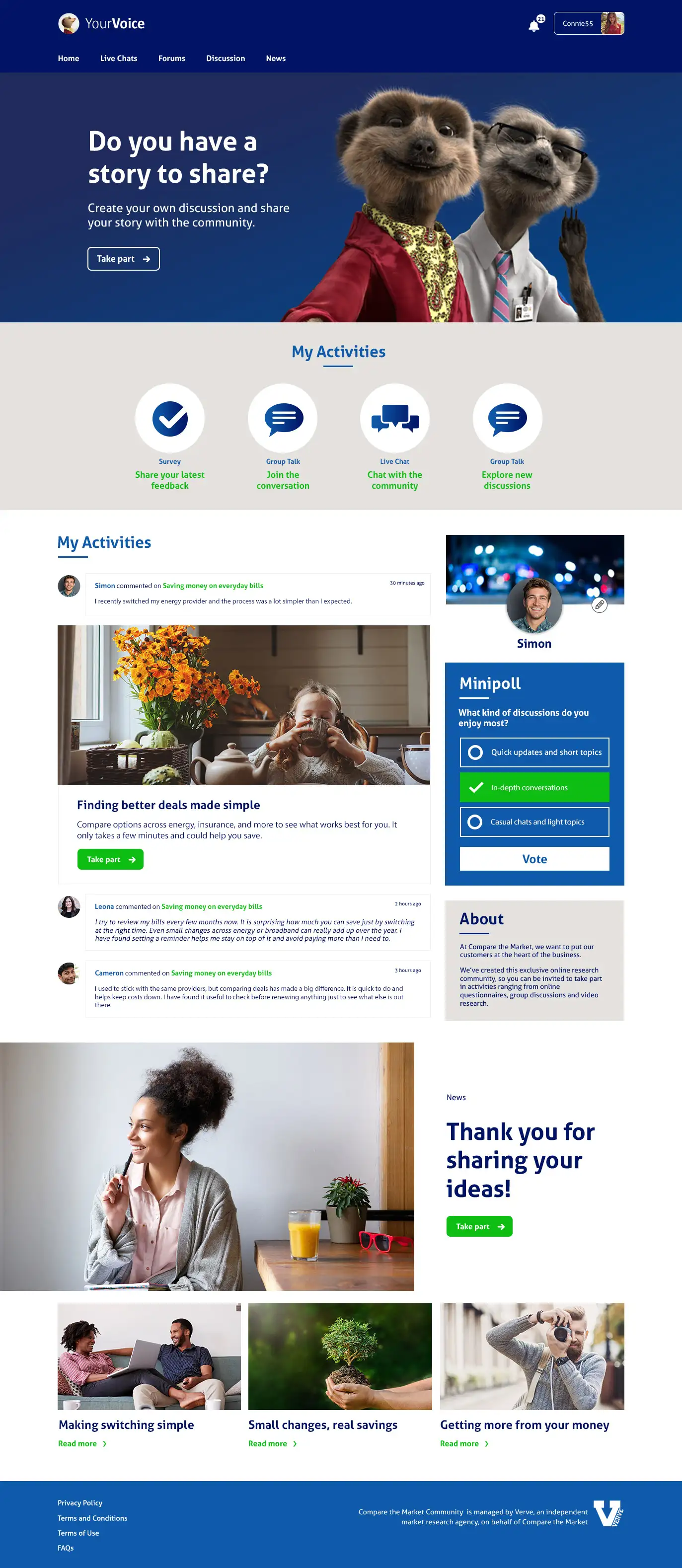 Compare the Market
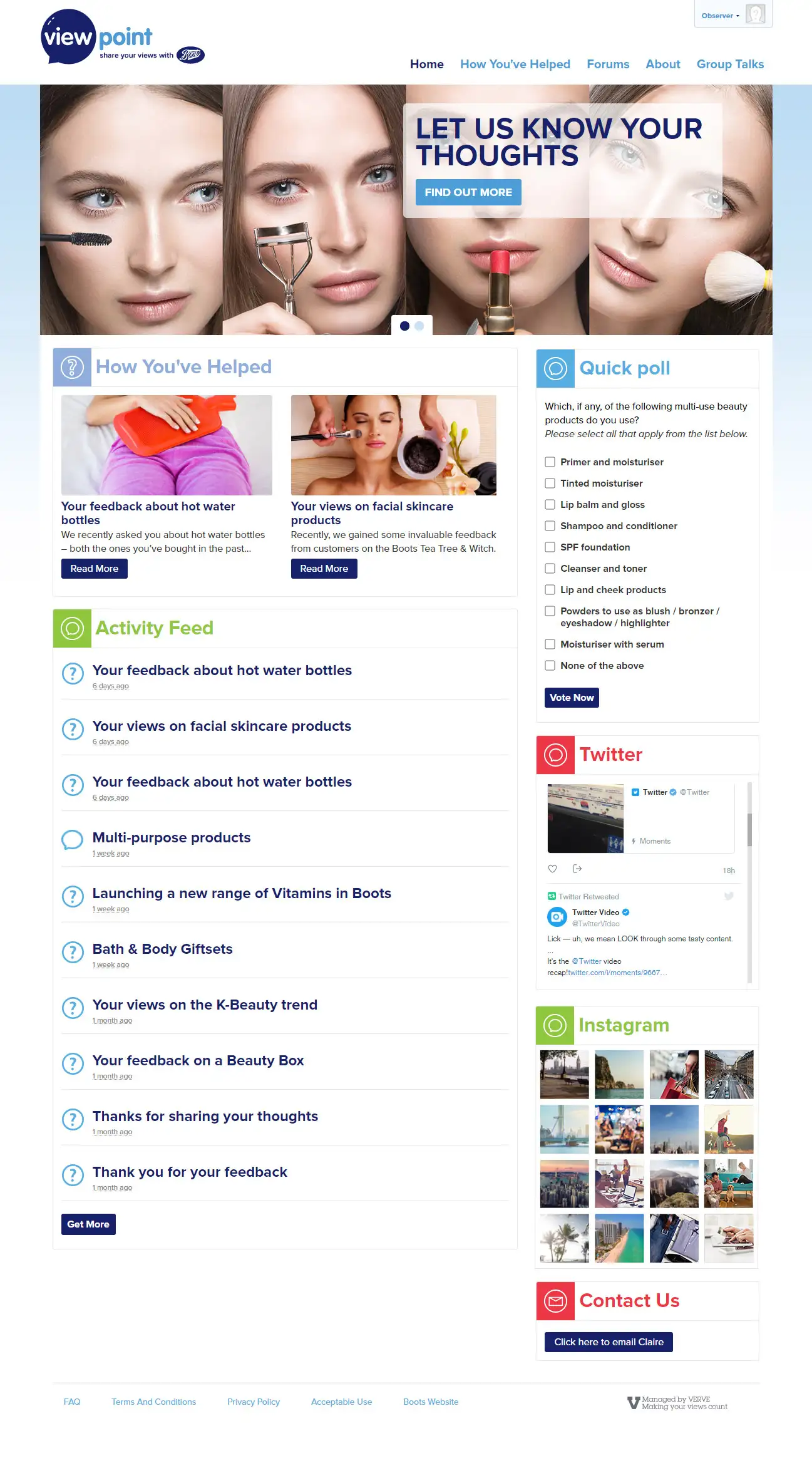 Boots
Boots
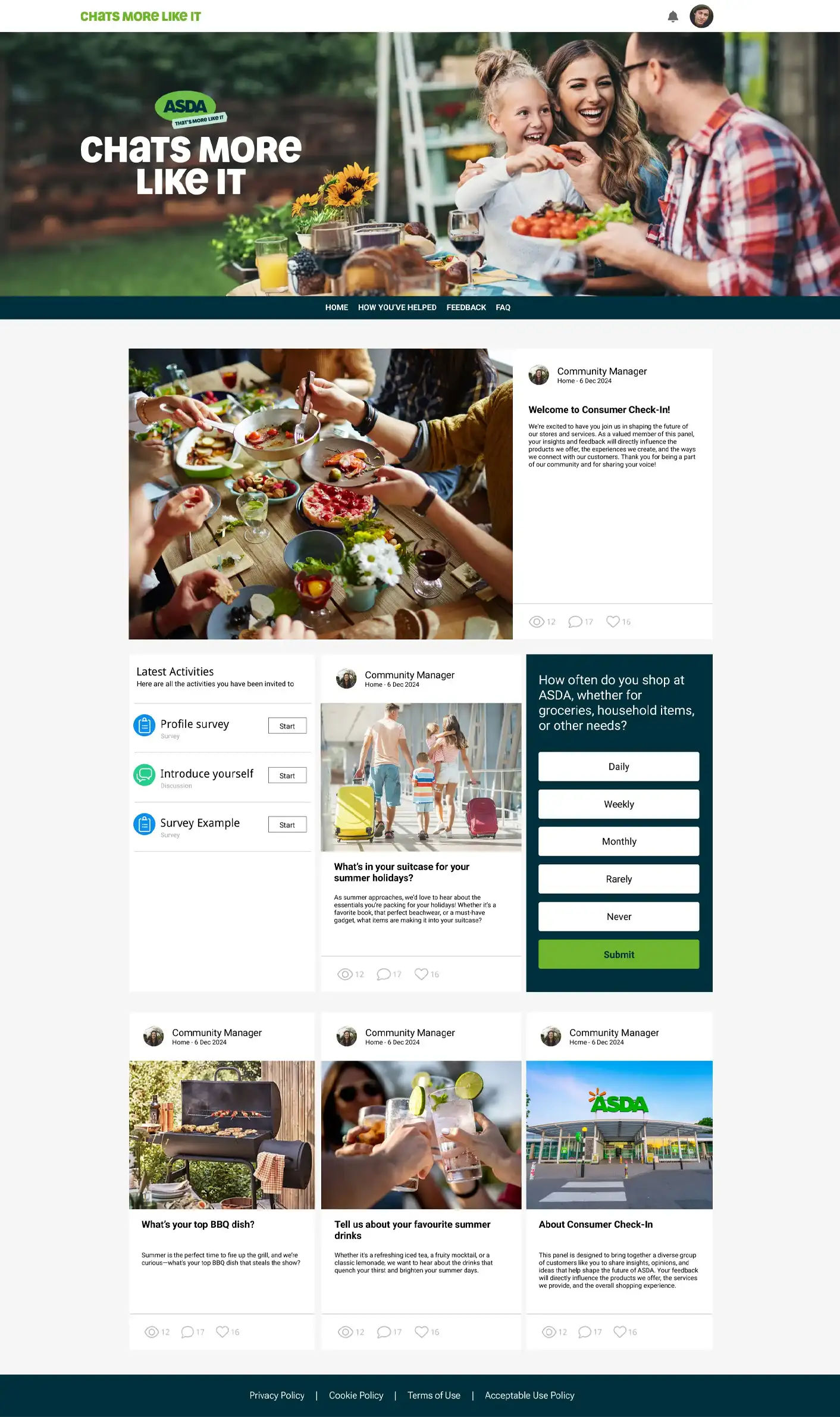 ASDA
ASDA
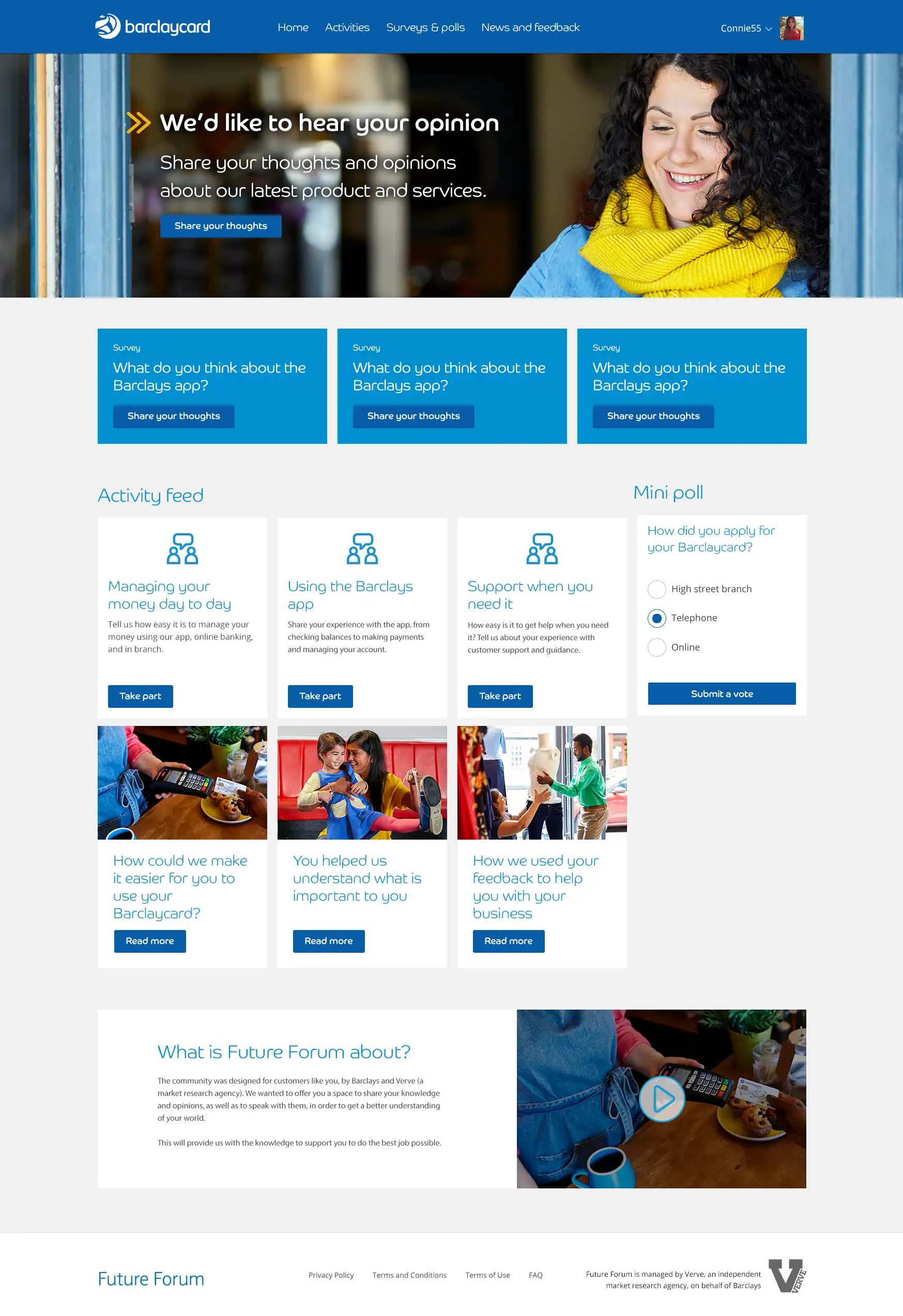 Barclays
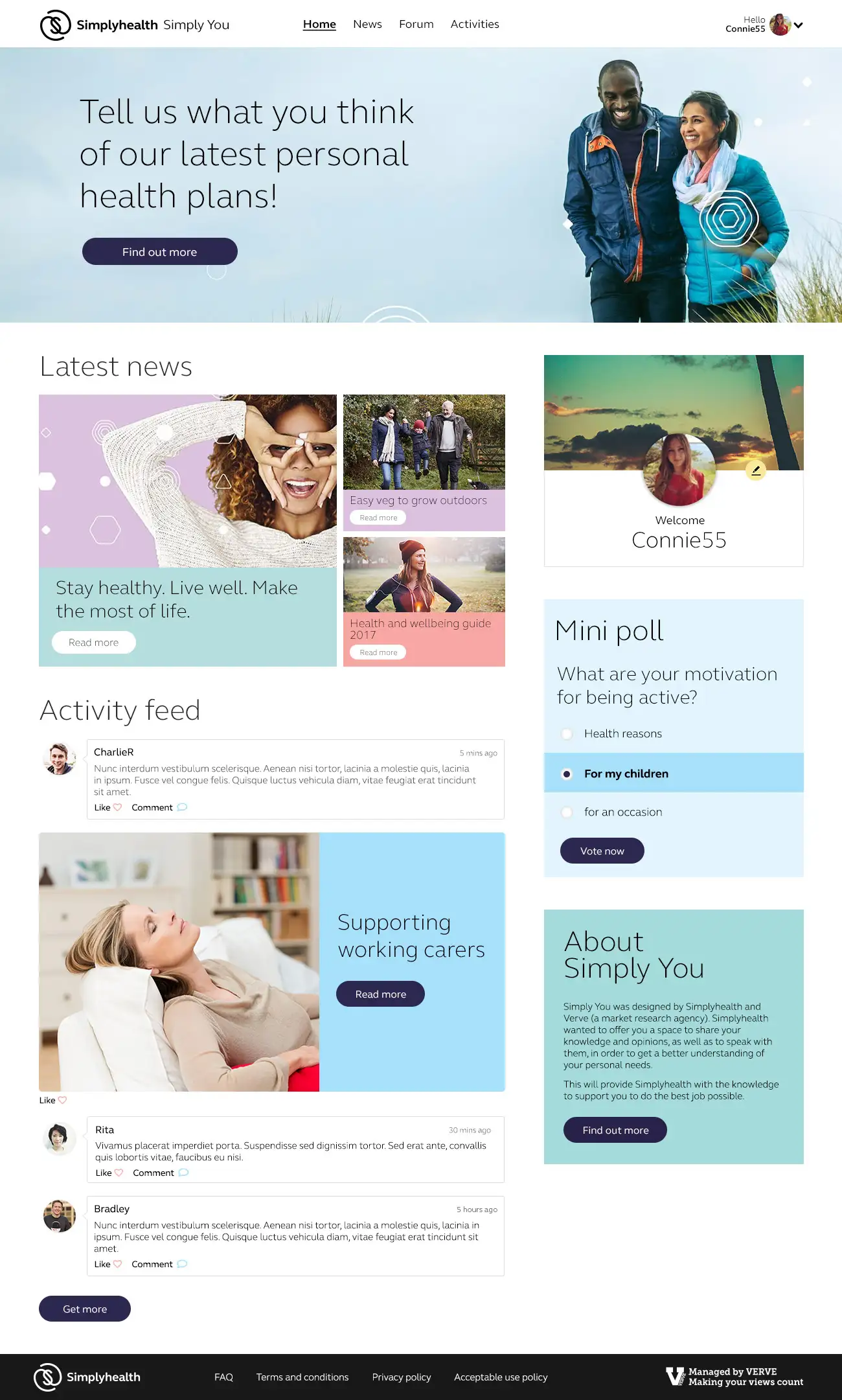 Simplyhealth
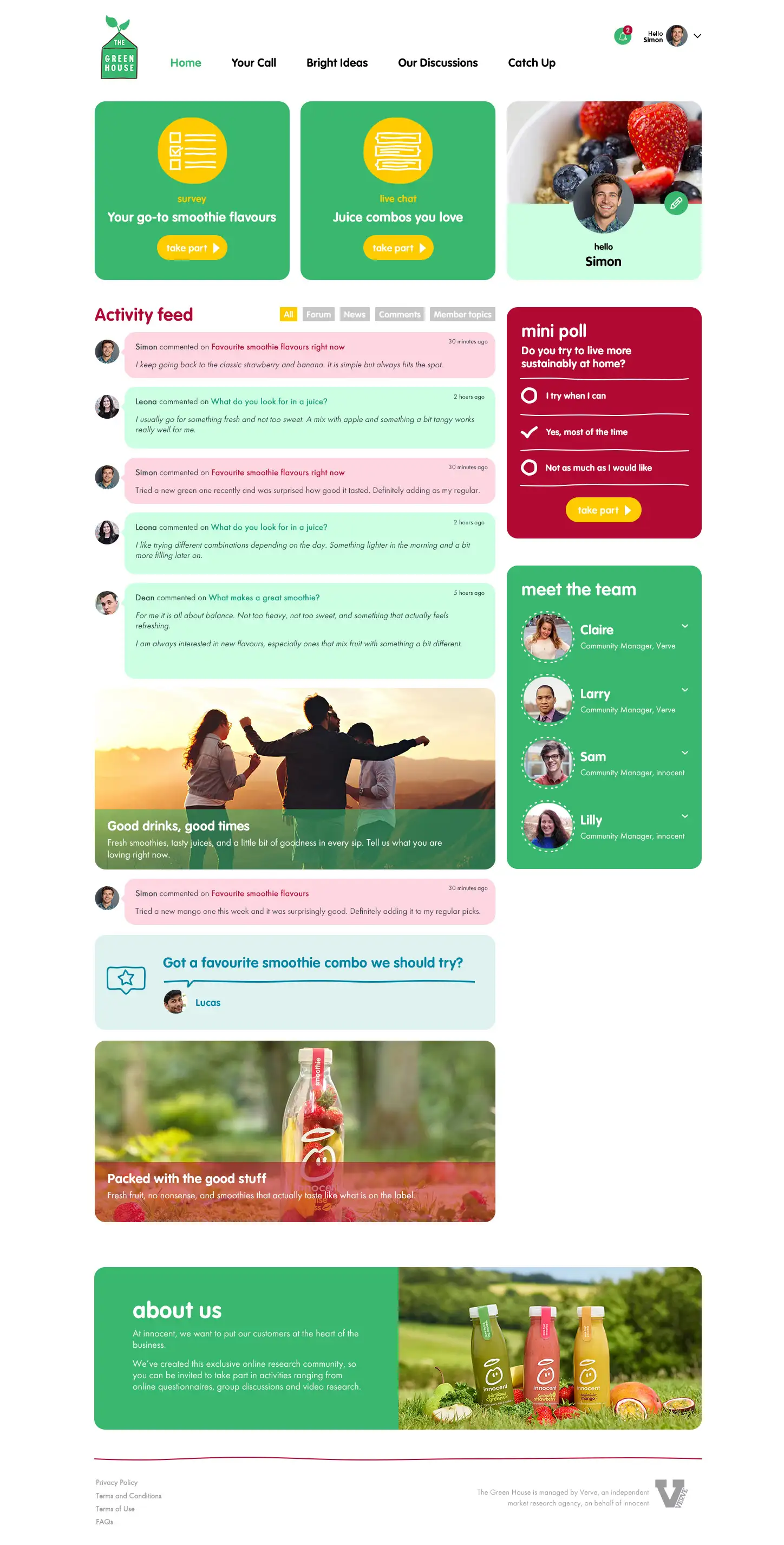 Innocent
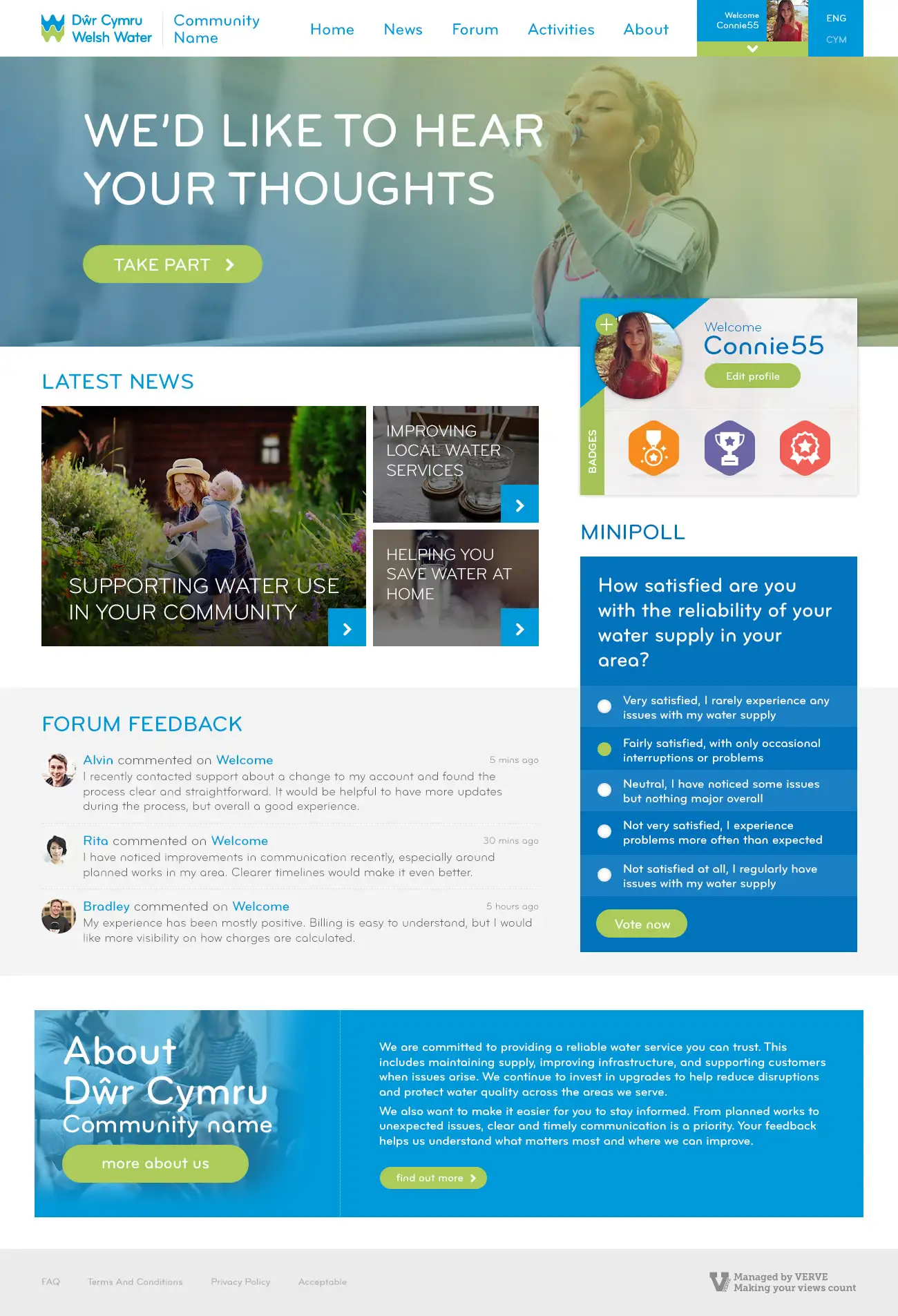 Welsh Water
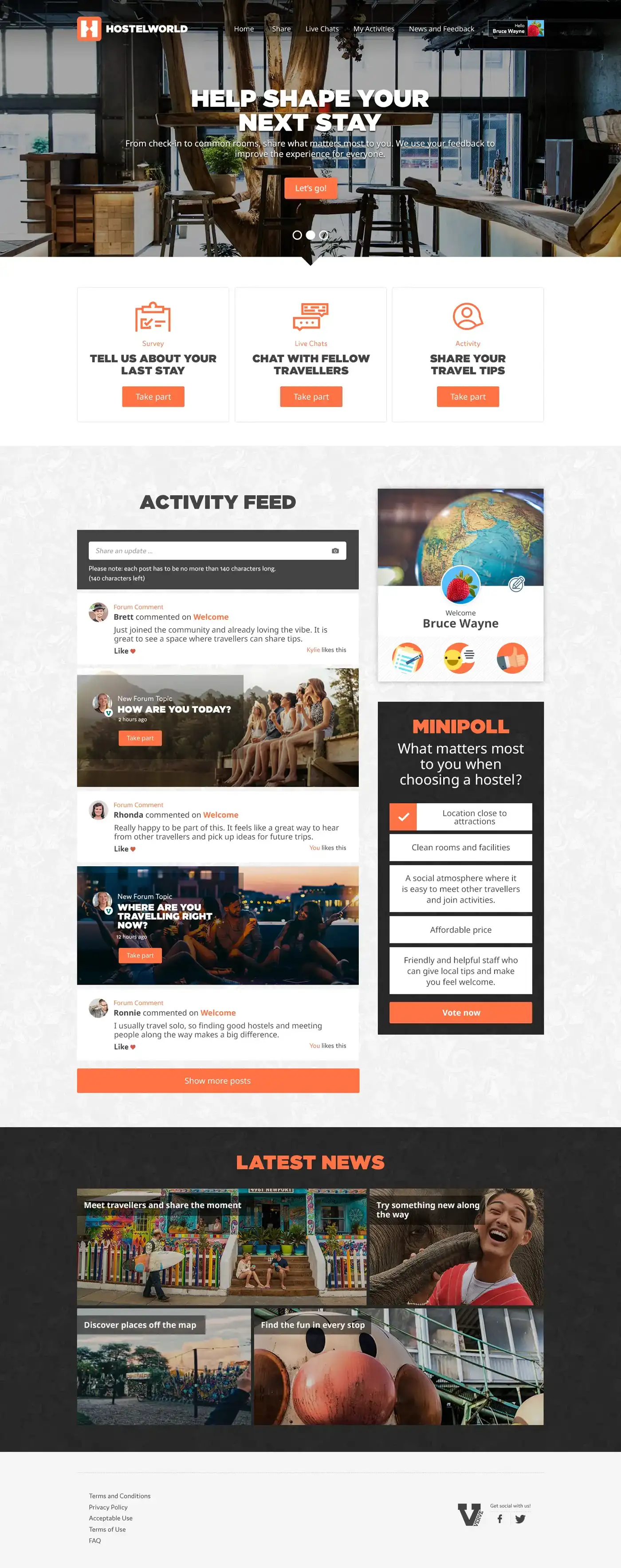 Hostelworld
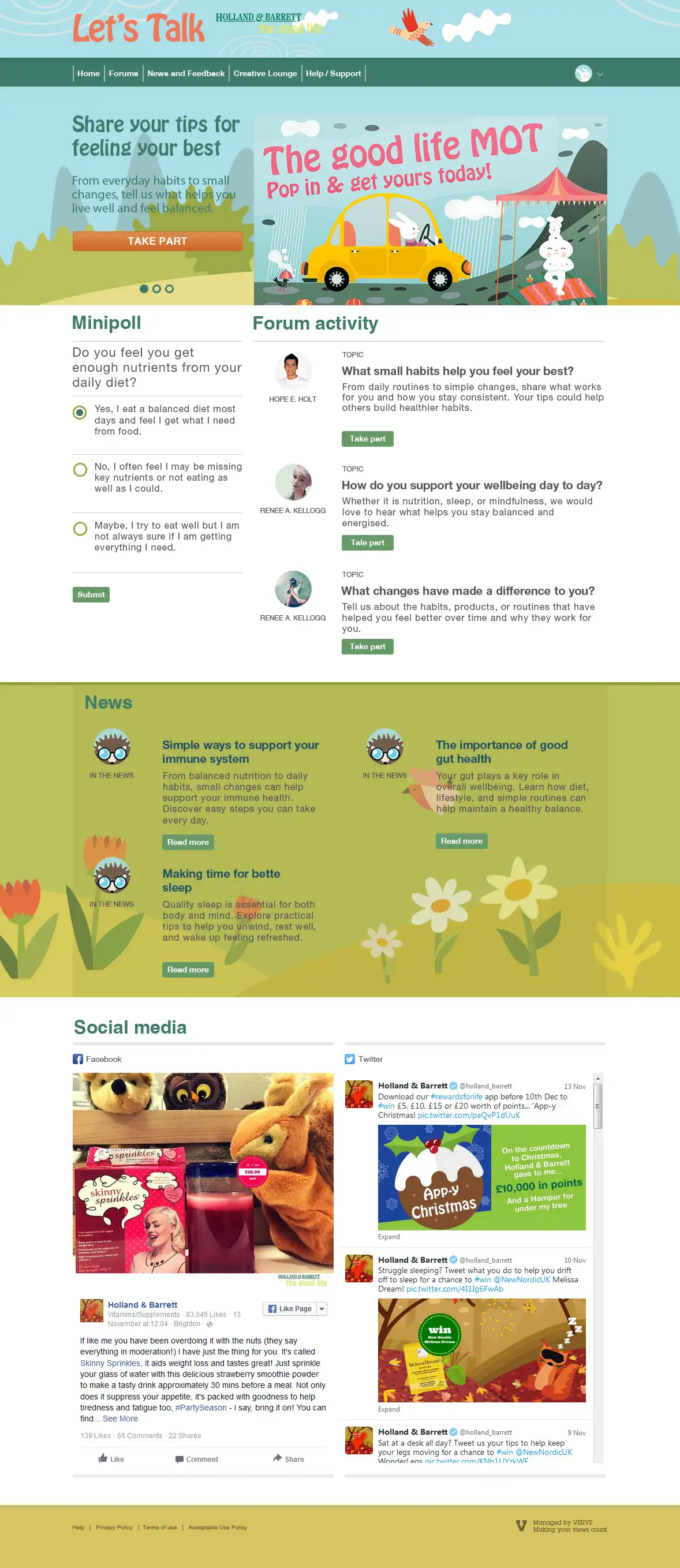 Holland & Barrett
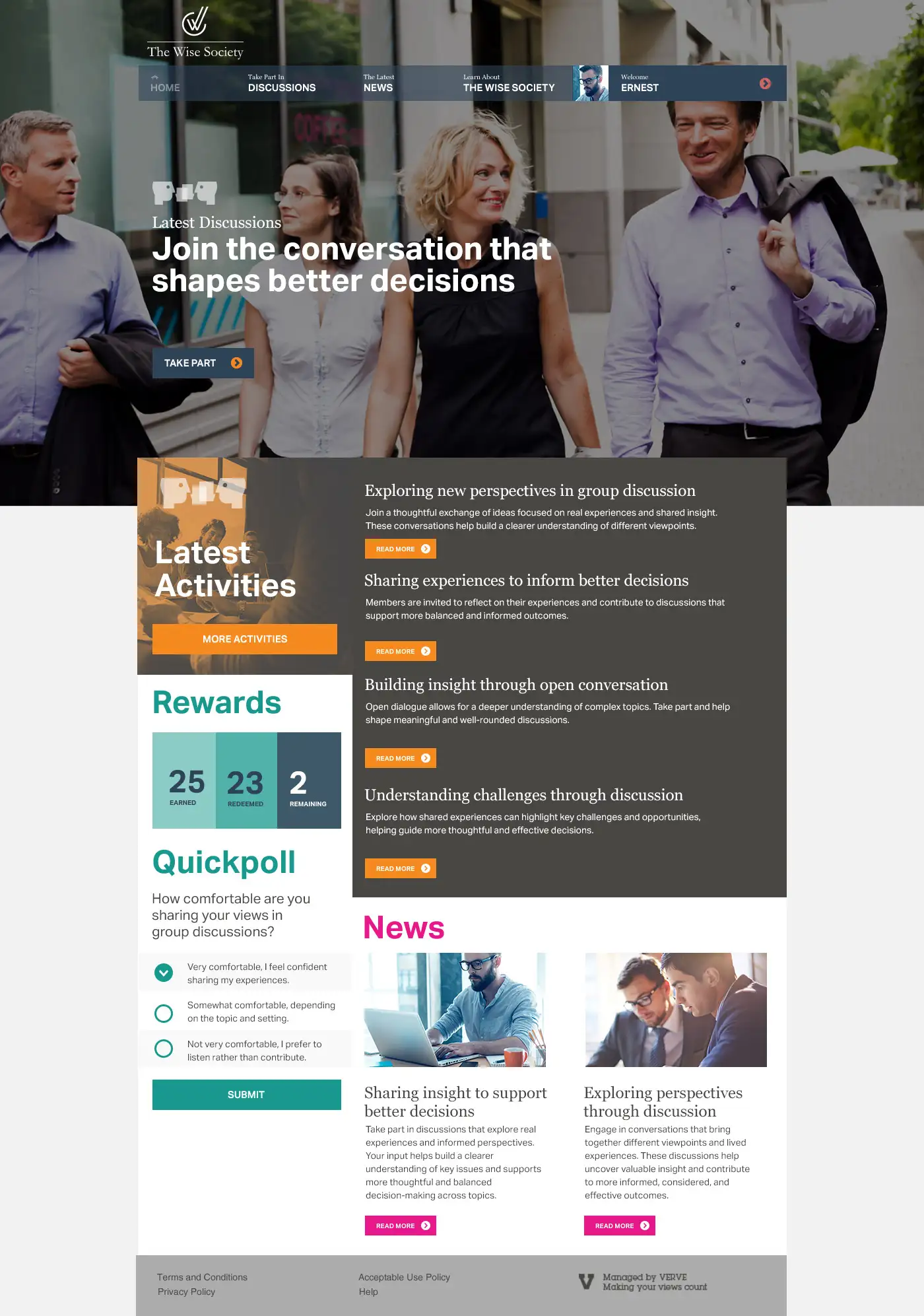 Wise Council
The Approach
Every panel starts with the brand.
Before touching the CMS, every project began with understanding the client's visual identity: their typography, colour system, logo usage rules, and tone. Where a full identity existed, the task was to translate it faithfully into a new environment. Where one didn't, it had to be created.
For panels requiring a bespoke identity, logos were designed to sit harmoniously alongside the parent brand while giving the community platform its own distinct character. This mattered because members needed to feel they were part of something specific to that brand, not a generic research tool.
- 01 Brand first. The panel should feel like an extension of the client's world, not a third-party tool wearing their logo.
- 02 Members matter. Engagement depends on the experience feeling considered and personal, not functional and forgettable.
- 03 Build what you design. Mockups were only the start. Every panel needed a clean, responsive, production-ready build.
Platforms & Constraints
Not every platform gives you the same room.
Community panels at Verve were built across different CMS platforms, each with different levels of customisation available. Understanding what was achievable within each constraint shaped how the design was approached from the outset.
Templated Platforms
Some platforms offered limited customisation: colour, logo and basic typography only. Here the challenge was making the most of what was available: getting personality through type choices, imagery and layout within a fixed template.
Open Platforms
Other platforms gave full control over the front end. These were built from scratch using HTML, CSS and jQuery, allowing custom layouts, animations, bespoke components and fully responsive builds that matched the mockup exactly.
The open-platform builds required the most careful handoff between design and code. Mockups had to account for responsive breakpoints, interactive states and edge cases before any code was written, since changes mid-build were costly on live platforms.
Emails & Surveys
The panel experience starts before login.
Community engagement doesn't begin at the homepage. Invite emails, reminder emails and survey introductions are often the first thing a member sees, and they need to carry the same visual language as the platform itself.
Emails were designed and built as HTML templates, coded to render consistently across clients and mail environments. Survey designs followed the same brand system as the panel, keeping the member experience coherent from inbox to submission.
A well-designed invite email sets the expectation before the member even logs in.
Reflection
Designing and building is a different skill set.
Working across the full stack, from initial brief through to a live, coded build, meant constantly switching between thinking like a designer and thinking like a developer. A decision that looked clean in a mockup sometimes created problems in the build, and understanding that gap early made both sides of the work stronger.
Delivering across many different clients also built a strong instinct for reading design systems quickly: understanding what a brand is actually about beyond its logo and colour palette, and translating that into something that feels genuinely on-brand rather than just technically correct.
What's Next
Room to grow across every platform.
- Component libraries built in Figma aligned to each platform's constraints, making future panel builds faster and more consistent from the start.
- Motion and microinteraction design for open-platform builds, adding purposeful animation to reward actions and improve perceived responsiveness.
- Deeper survey UX work, particularly around question flow, progress indicators and mobile-first design for surveys with high drop-off.